
Guides · savings
Ikan Bilis vs Kacang Malaysia — Pantry Snack Unit Price
Compare ikan bilis vs kacang snack packs in Malaysia on Priceory — two proteins, two unit prices; convert RM per 100g inside the tin you actually eat.
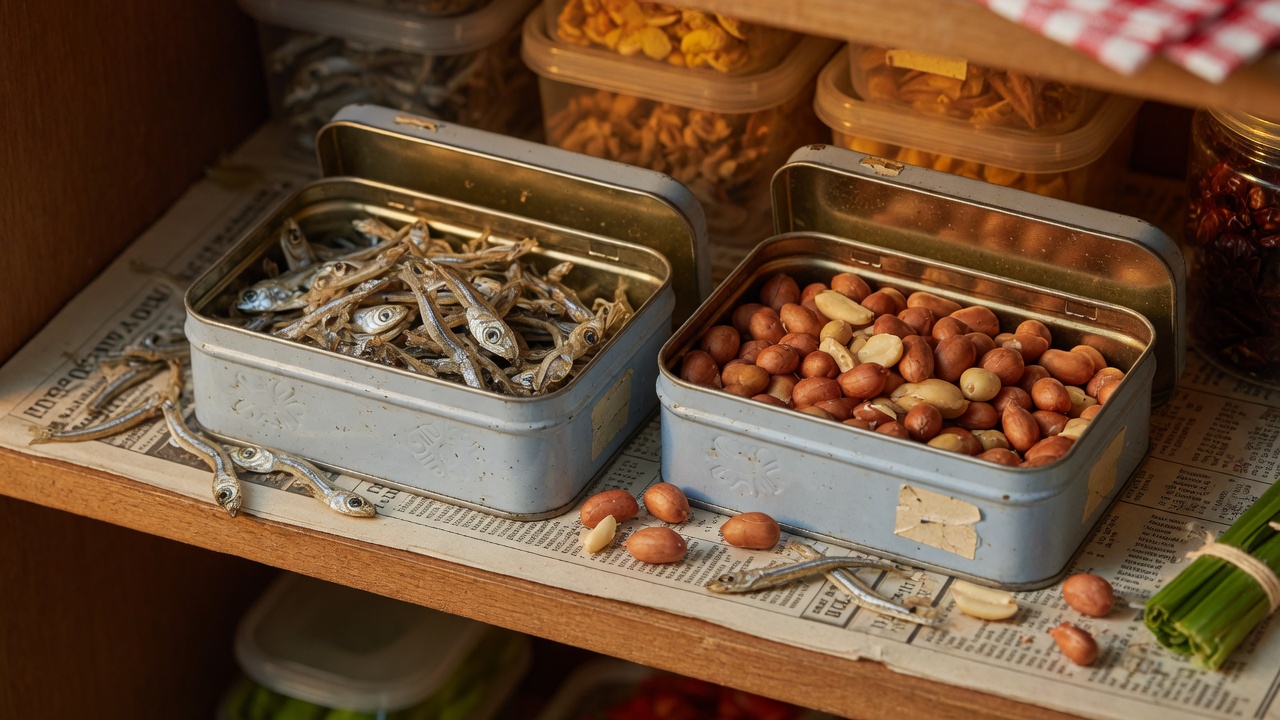
Ikan bilis and kacang both live near the snack tin and both disappear during teh tarik hours. They are not the same bag. Dried anchovies for nasi lemak topping are a different product from roasted peanuts for a movie bowl. A “party mix” is a third SKU. Comparing a 100 g bilis pouch to a 200 g peanut jar because both are “savoury protein” is how a fake saving appears.
This page keeps the two snacks on two price lists. It is not a nutrition ranking and not a recipe.
Two snack proteins, two price lists
| What you will actually open | Prefer | Why |
|---|---|---|
| Nasi lemak topping, fried bilis, sambal bilis | Ikan bilis of the grade you cook | Headless vs mixed changes the bag |
| Movie bowl, kacang with drinks | Roasted kacang (peanuts) you finish | Different flavour, different unit |
| You want both on the table | Two packs, two maths | Do not crown one over the other |
| Party mix / cocktail nuts | That mix only | Third product |
| Humid kitchen, slow snackers | Smaller pack + airtight tin | Soft bilis and limp kacang are waste |
Grade (headless vs mixed, large vs small) changes bilis price. Roast style and skin-on vs skin-off change kacang price. Lock the snack, then the grade.
Catalogue prices are indicative. Confirm grade, grams, and till.
What the snack and dried-goods bays sell
Ikan bilis (dried anchovies). Sold in pouches and boxes from about 60 g up to larger bulk bags. Shelf language includes headless, buang kepala, mixed, large, small, and sometimes pre-fried goreng. Headless cooking grade is not a snack mix. Pre-fried packs are a convenience product with their own RM/100 g.
Kacang (roasted peanuts and peanut snacks). Jars, tins, and pouches. Skin-on, skin-off, salted, honey-coated, chilli. Honey-coated is not the same as plain roasted. Compare inside one roast line.
Party mix / cocktail. Peanuts plus other bits. A third search. Do not use it to “beat” either plain snack on 100 g.
Other dried fish. Ikan kering that is not bilis, sotong crackers, fish snacks. Keep them off both ladders.
Humidity. Open bags in a Malaysian kitchen go soft. A cheap 500 g that turns leathery is not cheaper than a 150 g you keep in a tin.
Search one snack at a time: ikan bilis · kacang · kacang tanah
Ikan bilis versus kacang — not one bag
| Factor | Ikan bilis | Kacang (peanuts) | Party mix |
|---|---|---|---|
| What it is | Dried anchovies | Roasted peanuts (usually) | Mixed bits |
| Fair unit | RM / 100 g inside one grade | RM / 100 g inside one roast line | RM / 100 g of that mix |
| Kitchen job | Topping, sambal, fry | Snack bowl, some cooking | Snack bowl only |
| Grade / line traps | Headless vs mixed vs goreng | Skin, salt, honey coat | Hidden cheap fillers |
| Bulk risk | Soft, insect, forgotten bulk | Rancid oil note if old | You pick out one nut |
You may stock both. You may not declare a winner across bowls.
RM per 100g inside each snack (illustrative)
Unit = RM ÷ grams × 100
Two separate tables on purpose.
Ikan bilis — illustrative only
| Pack (illustrative) | Grade | Sticker | Net | RM / 100 g |
|---|---|---|---|---|
| Pouch A | Headless, medium | RM 8.90 | 150 g | RM 5.93 |
| Pouch B | Headless, medium | RM 12.50 | 250 g | RM 5.00 |
| Pouch C | Mixed (heads on) | RM 6.50 | 150 g | RM 4.33 |
| Pouch D | Pre-fried goreng | RM 9.90 | 120 g | RM 8.25 |
Pouch C is not a cheaper Pouch A. Mixed grade is another product. Goreng is convenience.
Kacang — illustrative only
| Pack (illustrative) | Line | Sticker | Net | RM / 100 g |
|---|---|---|---|---|
| Tin E | Plain roasted, skin-on | RM 7.90 | 200 g | RM 3.95 |
| Pouch F | Plain roasted, skin-on | RM 10.90 | 400 g | RM 2.73 |
| Jar G | Honey-coated | RM 11.50 | 200 g | RM 5.75 |
| Mix H | Party mix | RM 9.90 | 300 g | RM 3.30 |
Pouch F can win plain roasted. Jar G is a different line. Mix H is not allowed to “beat” bilis or plain kacang.
Choose the tin you will actually open
1. “Bilis is for Sunday nasi lemak”
Search ikan bilis. Lock headless if that is how you fry. Convert 100 g. A mixed cheap pouch is not a silent upgrade.
2. “Kacang is the evening bowl”
Search kacang or kacang tanah. Stay on plain roasted if that is the bowl. Honey-coat promos are another tin.
3. “The 500 g bilis is cheaper per 100 g”
Only if you have an airtight tin and a finish plan. Humidity is the hidden store. Bulk mistakes.
4. “I want a party mix because the unit looks low”
Buy mix as mix. Do not use it to replace either snack you actually cook with.
5. “Can I split shops — bilis at one, kacang at the other?”
Only inside My plan when other lines already pay for the second door. Two snack pouches do not justify two car parks.
Compare both snacks this week on Priceory
- Write which snack is empty: bilis or kacang — not “savoury tin.”
- Search one query: ikan bilis or kacang. Sort Best value first.
- Match grade (bilis) or roast line (kacang). Drop goreng if you wrote raw-dried. Drop honey-coat if you wrote plain.
- Convert RM per 100 g. Ignore “value pack” words until grams match.
- Compare stores on the same pouch. Lowest is same grade and same grams when matched.
- Add the empty snack — one line — to My plan · weekly. If both tins are empty, they can share a shop; they still do not share a unit chart.
- In the aisle, check seal, grade print, and humidity. A torn cheap pouch is not a unit win.
Matching: How Priceory matches products. Habit: Unit price.
Snack-aisle traps that blur two products
| Trap | Fix |
|---|---|
| Bilis 100 g vs kacang 100 g as one race | Two proteins, two lists |
| Mixed-grade bilis sold as headless | Read the grade; split |
| Pre-fried ikan bilis goreng vs dried | Convenience SKU |
| Party mix “winning” on 100 g | Third product |
| Honey-coated kacang vs plain | Different line |
| Huge open bag in a humid kitchen | Smaller pack + tin |
| Second store for one pouch | Basket + petrol |
Ikan bilis and kacang questions
Which snack is better value?
That question mixes two foods. Bilis value is RM/100 g inside one grade. Kacang value is RM/100 g inside one roast line. Stock the one you will open this week. If you open both, run both maths.
Why is headless bilis dearer than mixed?
You are not paying for the same bag. Heads and tiny bits change what you fry. If your nasi lemak wants headless, mixed is not a discount — it is another topping.
Are pre-fried bilis worth it?
They are worth time, not a cheaper 100 g. Compare goreng packs to other goreng packs. Then decide if the convenience is the product you meant to buy.
The 400 g kacang pouch beats the tin. Should I always go big?
If the unit wins and the pouch will stay sealed and finished, yes. If the last bulk pouch tasted old, buy the tin. Unit price does not override a rancid leftover.
Do these snacks need their own shopping trip?
No. They ride with the weekly staples. Use My plan and the jimat playbook. A dedicated detour for 150 g of bilis is how petrol wins.
Related guides
- Unit price shopping Malaysia
- How to compare grocery prices
- Bulk buy mistakes
- 99 carton vs single
- Jimat grocery playbook
- Tofu vs tempeh protein
- How Priceory matches products
- Canned sardine vs tuna
Keep the tins separate, then jimat inside one
Choose bilis or kacang (or both as two lines). Convert RM per 100 g inside one grade or one roast. Prefer a pack you can keep dry. Confirm seal and till.
Illustrative tables and catalogue cards are indicative. Confirm pack and till in store. Corrections: [email protected] · Editorial standards.
Related guides
 99 Speedmart Carton vs Single — When Bulk Packs Actually Save Money
 Anmum Price Compare Malaysia — Materna, Lacta & Essential Step
 Baby Feels Warm / Fever Worry Malaysia — First-Time Parent Red Flags
 Baby Keeps Crying Malaysia — First-Time Parent Calm Checklist (Not Medical Advice)
 Baby Red Skin & Diaper Rash Malaysia — Care Red Flags + Wipes/Diaper Price Tips
 Baby Tummy Pain & Wind Malaysia — Calm Parent Guide (Clinic First)
Plan this week → · catalogue prices · confirm on shelf