
Guides · policy
MyKasih 2026 Guide — How Malaysian Families Stretch Grocery Money (Bantuan Makanan)
Clear 2026-oriented MyKasih / food-assistance shopping guide for Malaysia — how programmes work, what staples families prioritise, realistic savings examples, and how to compare AEON, Lotus’s and 99 prices on Priceory before you spend.
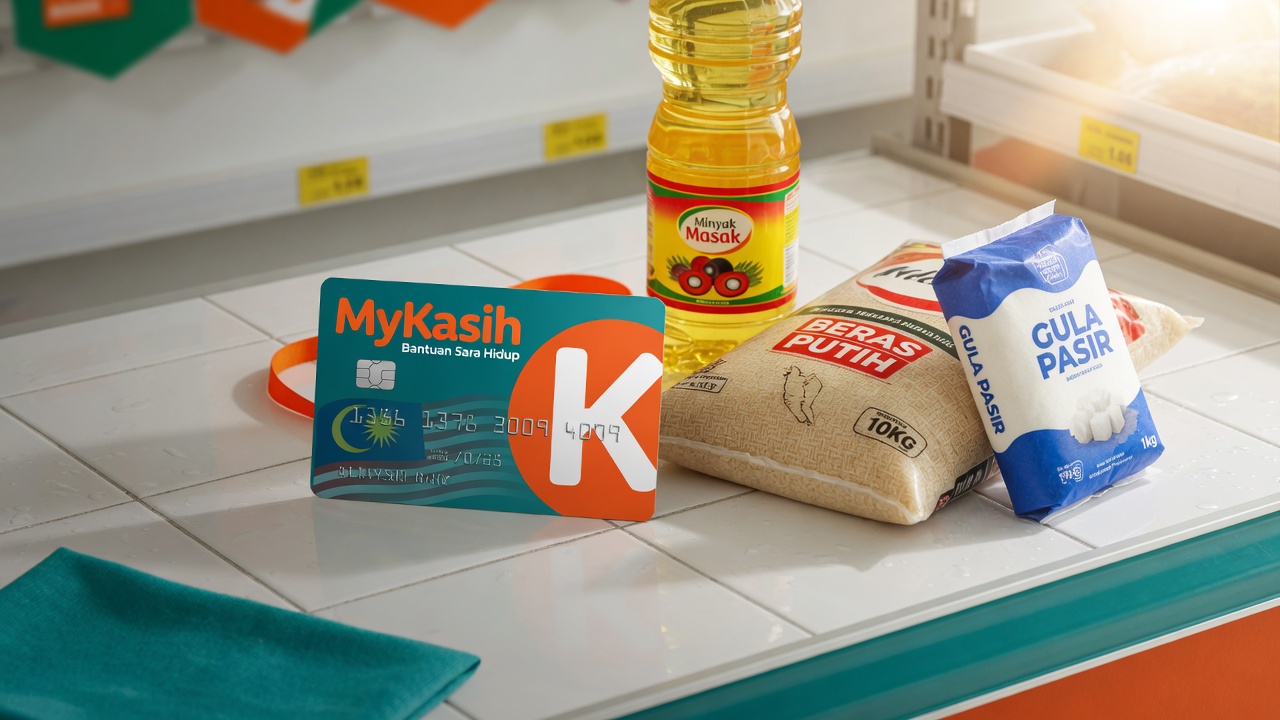
Why this MyKasih guide matters in 2026
For many Malaysian households, MyKasih (and related food-assistance channels such as Sumbangan Asas Rahmah / bantuan makanan at participating outlets) is not a side topic — it is part of how the monthly bajet dapur works. Even if your household is not on a scheme, the same staples that programmes focus on — minyak masak, beras, gula, tepung, susu — are exactly where small price gaps become real money.
This Priceory guide is practical shopping content, not an official government circular. Programme names, participating chains, card rules and item lists change. Always confirm with your card issuer, the supermarket cashier, or the latest official announcement before you rely on eligibility claims.
Disclaimer (penting): Priceory does not certify that any product is MyKasih-eligible. We compare observed catalogue and flyer prices across stores so you can spend cash or assistance value where it goes further.
How MyKasih-style shopping usually works (plain language)
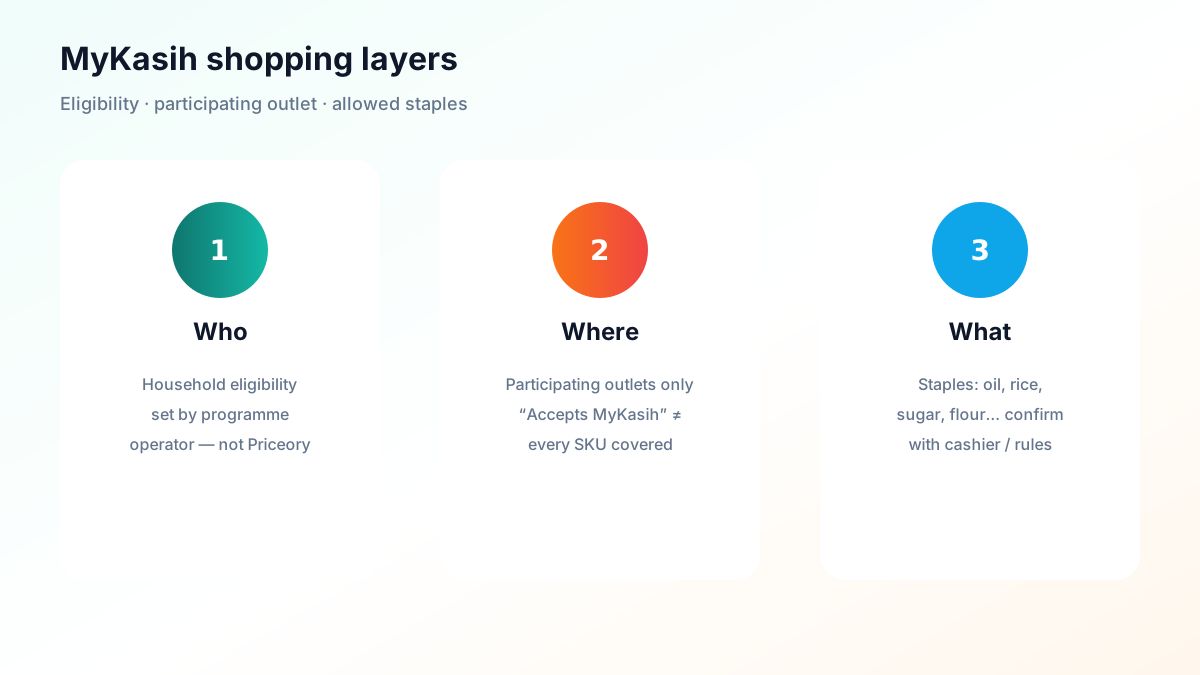
Think in three layers:
- Who is eligible — household registration / income criteria set by the programme operator (not by Priceory).
- Where you can use it — only participating outlets. A poster that says “We accept MyKasih” means the store channel accepts the payment rail, not that every SKU on the shelf is covered.
- What you can buy — often weighted toward essential groceries (staples), sometimes with category limits or merchant-specific catalogues.
In Bahasa: bantuan is meant for barangan keperluan asas. Treat fancy snacks, premium imported goods, and impulse buys as cash-only unless your programme documentation says otherwise.
What “2026 latest rules” means on a comparison site
We cannot hard-code a legal gazette into every product row. Rules evolve by state, partner bank/card, and retailer. What does stay useful year after year:
- Prioritise high-frequency staples first.
- Match brand + pack size before you celebrate a “cheap” sticker.
- Use multi-store comparison so assistance balances are not wasted on the wrong shelf.
- Re-check prices after weekend flyers rotate (Lotus’s national flyers, AEON promos, 99 bulk packs).
Staples Malaysian families usually prioritise
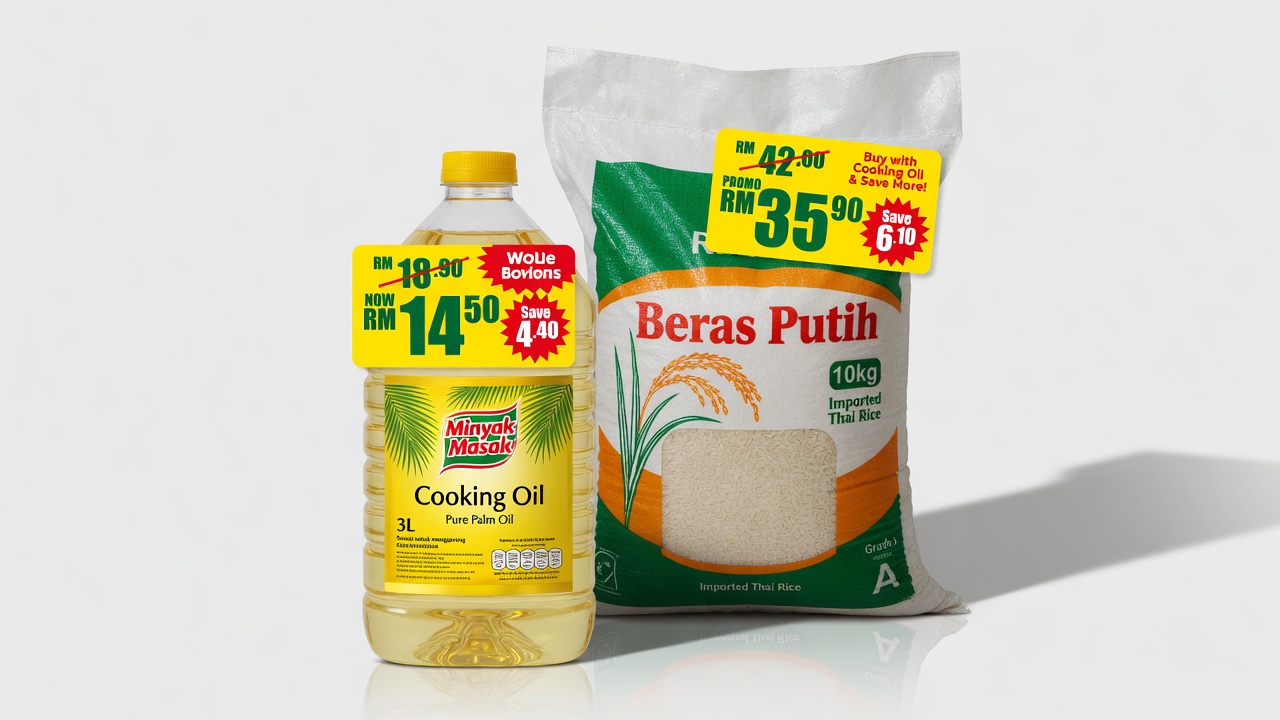
1. Cooking oil (minyak masak)
Oil is a classic “small gap, big monthly impact” item. Compare RM per kg / per litre, not only the front-of-pack number. A 1kg promo pouch can lose to a 5kg tin on unit price — or win if the large tin is overpriced that week.
Do this on Priceory: Search cooking oil → open Compare when the same brand appears in two stores.
2. Rice (beras)
Local vs imported, 5kg vs 10kg, and brand tier all change the bill. Storage and pests matter — a “cheap” 10kg bag is not a win if half spoils.
Do this: Search rice and note pack size on every card.
3. Sugar & flour (gula, tepung)
These are monthly restock lines. Multi-store gaps of RM1–RM3 look boring until you multiply by 12 months.
4. Milk drinks & family dairy
Not always “aid category”, but high spend. Use pack maths carefully (1kg tin vs multi-pack).
5. Baby-related spends (if applicable)
Formula and diapers destroy budgets. Programmes may only cover limited baby lines — verify first. For cash comparison, use our Baby milk tips and diapers guide.
Realistic savings examples (illustrative)
These are example maths based on how multi-store gaps typically appear in Malaysian catalogues — not a promise of today’s live price.
Example A — Cooking oil
- Store A lists Brand X 5kg at RM42.90
- Store B lists the same Brand X 5kg at RM38.50
- Gap: RM4.40 on one item
If your household buys oil twice a month, that is roughly RM8–RM9 / month — before you optimise rice and detergent.
Example B — Basket of four staples
Suppose verified multi-store gaps (same pack) look like:
| Item | Cheaper shelf | Gap vs other store |
|---|---|---|
| Rice 10kg | Store B | RM3.00 |
| Oil 5kg | Store B | RM4.40 |
| Sugar 1kg | Store A | RM0.80 |
| Flour 1kg | Store A | RM0.60 |
| Total | mixed | ~RM8.80 |
If you already drive to Store B for oil and rice, pick sugar/flour there only if the detour is free. Travel cost is real. Priceory helps you decide which gaps are worth a second stop.
Example C — Assistance balance discipline
Imagine RM100 assistance value left this month. Spending it on poorly matched “promo” packs that are actually expensive per kg wastes the programme. Spending it on the cheapest verified staple pack stretches the same RM100 further.
Step-by-step: use Priceory with a MyKasih budget
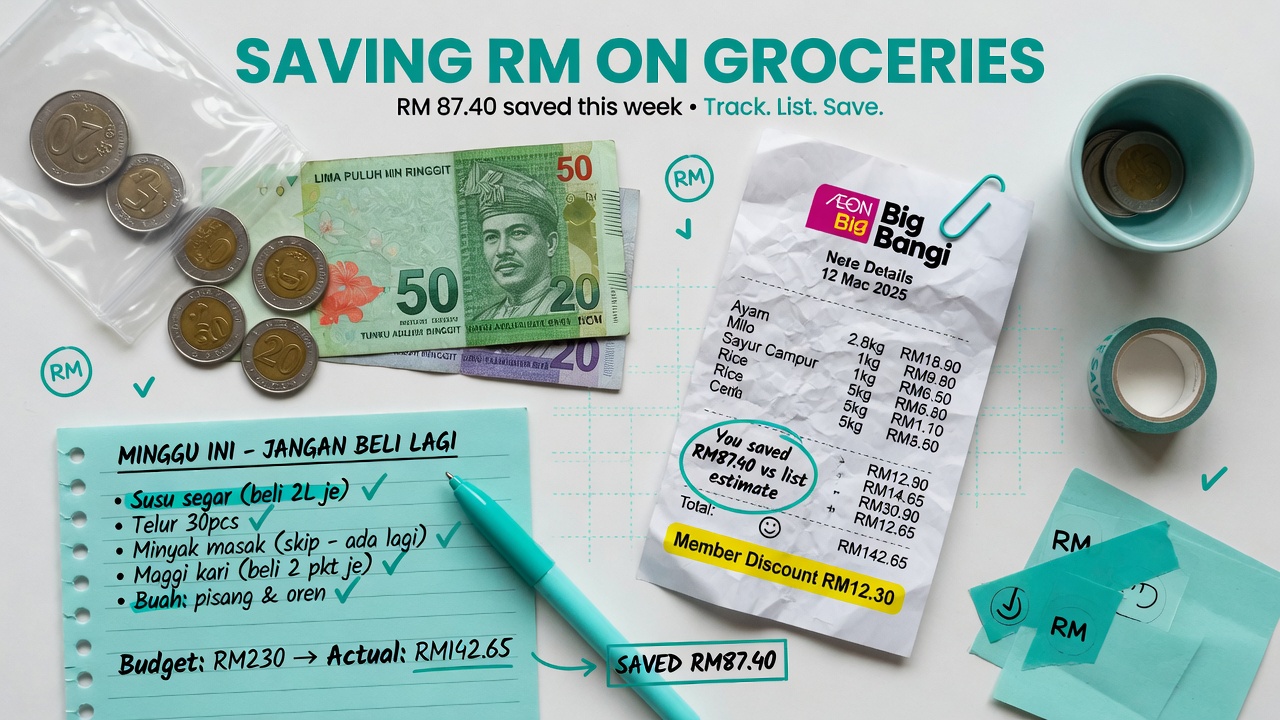
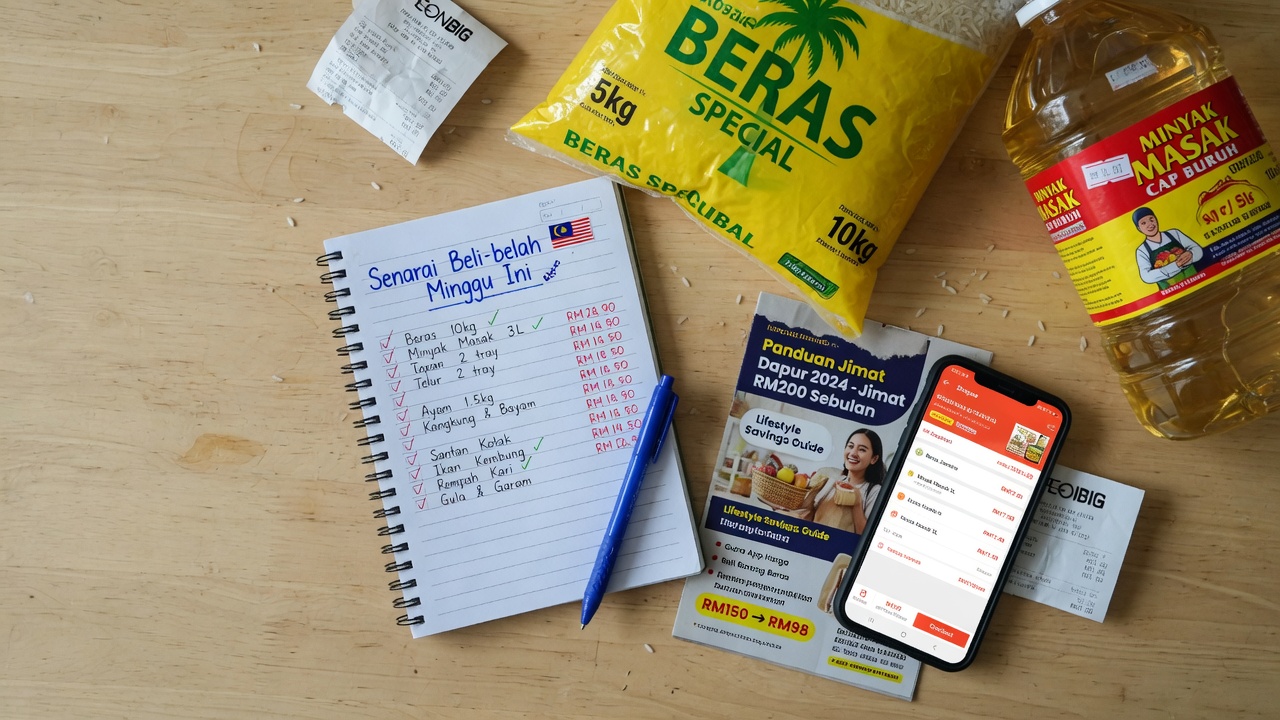
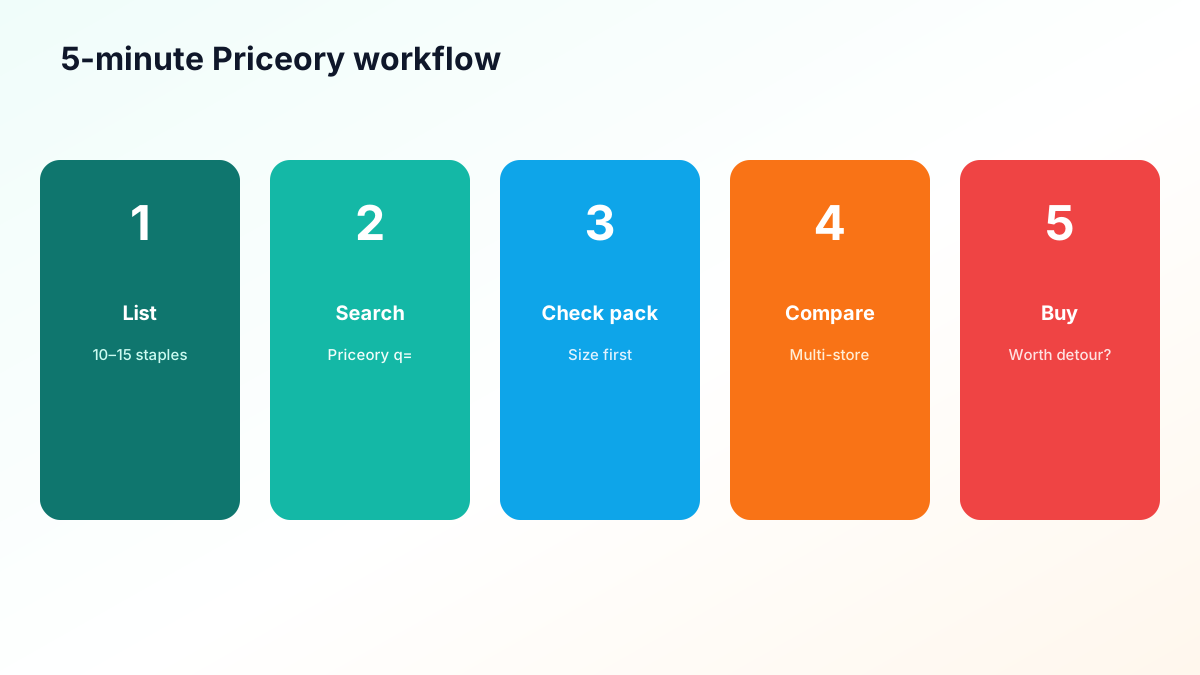
- Write a short list of 10–15 recurring staples (senarai beli bulanan).
- Open Priceory Search and type each staple.
- Check merchant + pack size on every result row.
- When two stores show the same brand/pack, hit Compare prices.
- Prefer homepage Best multi-store deals only when the savings burst looks large and packs align.
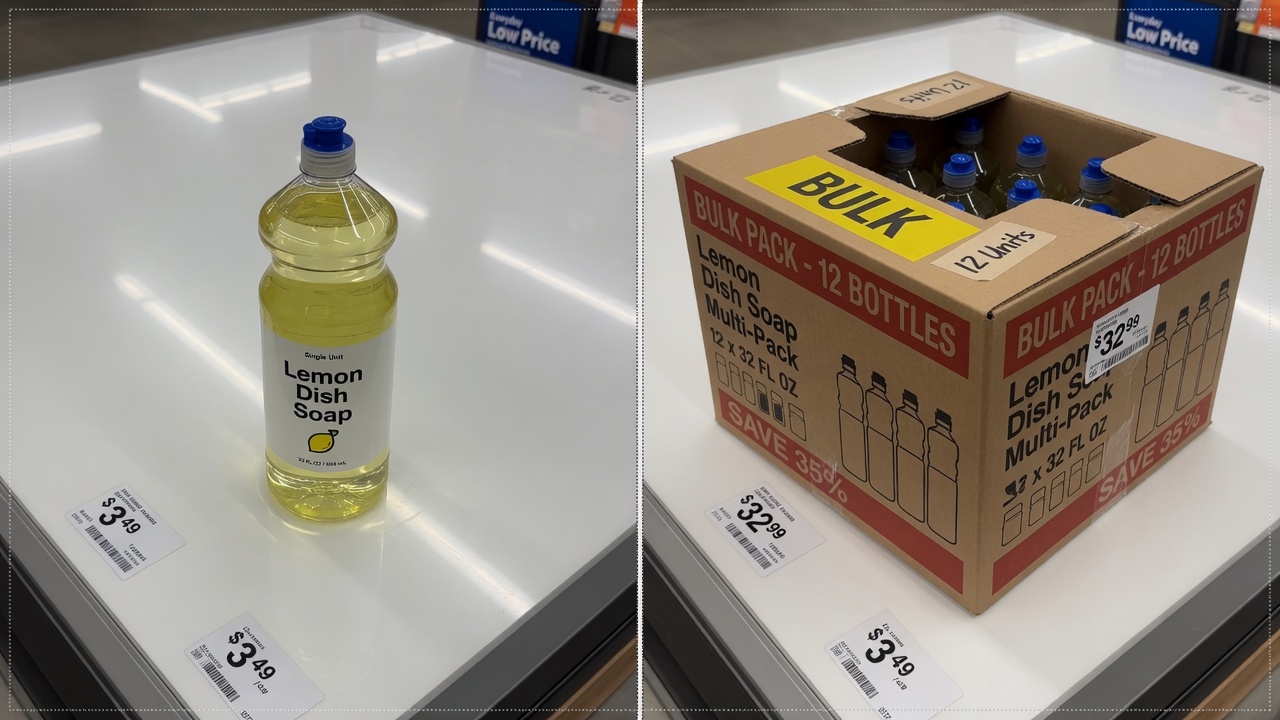
- For 99 Speedmart multi-packs, read 99 carton vs single before assuming a carton is a bargain.
- Re-check after flyer cycles — Lotus’s national flyer and AEON categories refresh on different rhythms.
Participating outlets vs “covered products”
Shoppers often confuse:
- “Store accepts MyKasih” → payment rail works at checkout
- “This SKU is programme-covered” → item is on an allowed list
Raw merchant tags in some catalogues (for example a free-text “mykasih” label) are not official eligibility certificates. That is why Priceory uses a soft educational module on the homepage instead of hard product badges by default.
Practical tips that protect your balance (tips jimat)
- Match the pack. 1L ≠ 2×500ml if promo math differs.
- Watch promo end dates when shown on compare cards.
- Don’t chase every 20 sen if the cheaper store is far — fuel and time matter.
- Bulk only if you can store and finish the volume before quality drops.
- Keep a screenshot habit on mobile: search top 5 items before leaving home.
- Separate “aid staples” and “cash treats” so emotional shopping does not burn the assistance wallet.
Common mistakes we see
- Comparing a carton to a single and thinking you found a miracle discount.
- Switching rice brands every week and never building pack familiarity.
- Ignoring unit price on oil.
- Assuming AEON is always more expensive (or always cheaper) for every category — category winners rotate.
- Trusting flyer screenshots without checking pack size text.
Related Priceory tools & guides
- MyKasih cashless shopping at retailers — participating stores, trip OS
- Sumbangan Tunai Rahmah (STR) & groceries — cash aid restock habits
- Budi95 & grocery trips — subsidised RON95 vs 2-store maths
- MyKasih + STR + Budi95 stack — one household playbook
- Essentials checklist · Family budget stretch
- Harga Terkawal guide — controlled prices vs shelf promos
- 99 carton vs single — bulk pack honesty
- Cooking oil & rice bulk maths
- How Priceory matches products — why we reject bad links
- Live tools: Search · My plan · Fuel · Home
Bottom line
MyKasih-related shopping in 2026 still rewards the same discipline: know your staples, match packs, compare stores, ignore hype. Priceory exists to make the multi-store step faster — so every ringgit, whether from wages or bantuan, buys more keperluan sebenar.
Related guides
 99 Speedmart Carton vs Single — When Bulk Packs Actually Save Money
 Anmum Price Compare Malaysia — Materna, Lacta & Essential Step
 Baby Feels Warm / Fever Worry Malaysia — First-Time Parent Red Flags
 Baby Keeps Crying Malaysia — First-Time Parent Calm Checklist (Not Medical Advice)
 Baby Red Skin & Diaper Rash Malaysia — Care Red Flags + Wipes/Diaper Price Tips
 Baby Tummy Pain & Wind Malaysia — Calm Parent Guide (Clinic First)
Plan this week → · catalogue prices · confirm on shelf