Pay in Full, Instalment, or Balance Transfer? Malaysia’s Type A / B / C Debt Moves
Handle credit card balances in Malaysia — pay full (A), instalment (B), or balance transfer (C) — with scenarios, traps, and a clear default lifestyle.
Opening
Credit cards are great until the statement arrives and you invent a new personality called “I’ll pay later.”
Here are three moves. Only one should be your lifestyle.
Not financial advice. Promo rates and fees are on the bank’s terms — read them.
The lineup
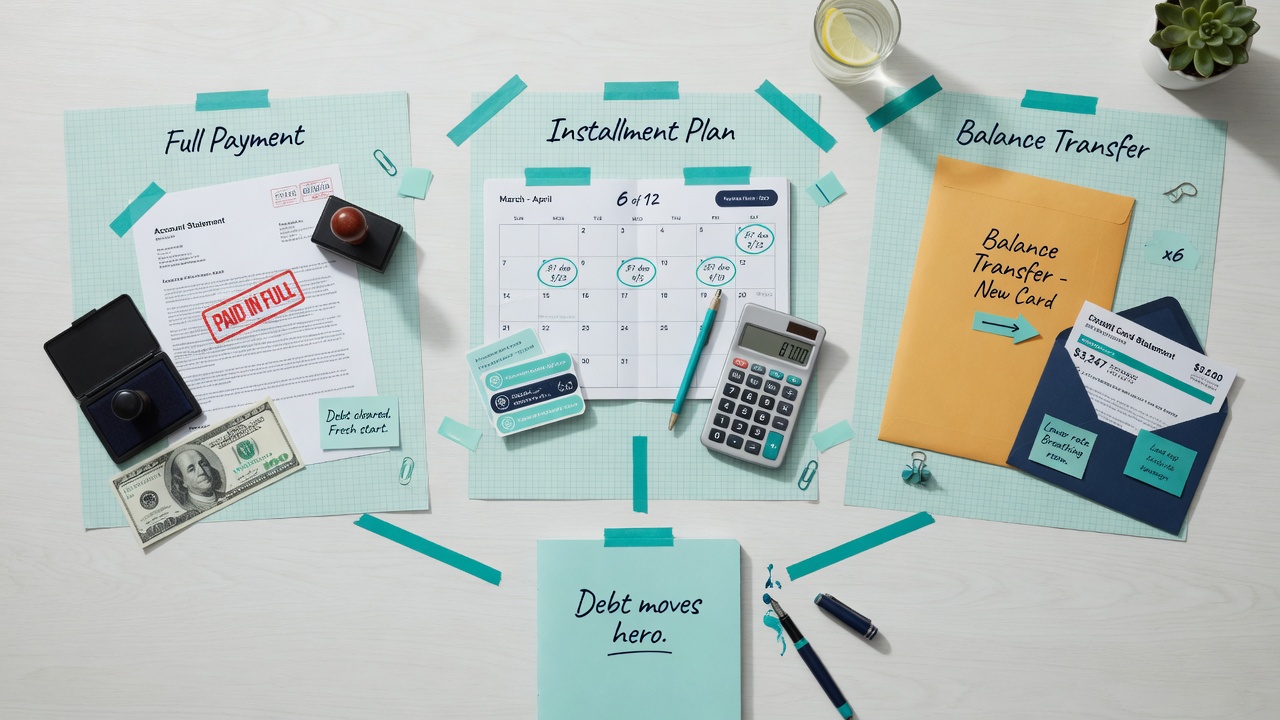
| Type | Move | Hero arc | Villain arc |
|---|---|---|---|
| A | Pay full | Rewards = free-ish money | None if consistent |
| B | Instalment | One big planned buy | Forever-instalment lifestyle |
| C | Balance transfer | Escape high interest | Double-card spending chaos |
Default: Type A. Always.
If you’re already deep in balances: full payoff plan
Type A — Pay full (the main character)
Auto-pay statement balance. Treat the card like debit that sometimes gives cashback.
| Do | Don’t |
|---|---|
| Full statement auto-pay | Pay minimum “for now” for six months |
| One daily-driver card | Five cards arguing in the wallet |
| Alerts on | Ignore due dates |
If you can’t clear this month? Switch daily life to debit and stop new credit spend.
Type B — Instalment
Use for: phone, appliance, something you’d buy anyway, with clear fees and end date. Don’t use for: groceries you already ate, Grab rides, or “I felt sad.”
| Question | Good answer |
|---|---|
| Would I buy this in cash if I had it? | Yes |
| Do I know total cost including fees? | Yes |
| Can I pay this + all other minimums? | Yes |
| Am I already revolving other balances? | No — fix that first |
If the plan needs a spreadsheet and a prayer, skip it.
Type C — Balance transfer / 0% promo
Use when
- Promo fee + rate still beats your current interest
- You can clear inside the promo window
- You stop spending on the old card
Don’t use when
- You’ll treat the freed-up limit like a festival
- You’re stacking transfers to look “managed”
- You don’t have a written payoff date
Rough decision math (illustrative)
| Path | Think about |
|---|---|
| Stay & pay high interest | Months × interest cost |
| Transfer + promo fee | Fee + can I finish before promo ends? |
| Instalment on same bank | Total payable vs carrying revolving |
If numbers are fuzzy, default to cut spend + attack balance (payoff guide).
Speed chooser
`` Can you clear this month’s full statement? YES → Type A. Forever, preferably. NO → One planned purchase only? YES → Type B (read every fee) NO → High-interest pile + discipline to stop spend? YES → Type C + strict payoff plan NO → Cut spend. Type A habits. AKPK if drowning. ``
Worked scenarios
1) Statement RM2,800, salary next week, always full-pays
→ A. Maybe shift due date with bank if timing is awkward — don’t instalment life.
2) New laptop RM4,000, zero other debt, stable income
→ B only if total cost beats waiting 2 months to buy cash; else wait.
3) RM15,000 across two cards, only paying minimums
→ Stop spend → payoff plan → consider C only with written finish date and frozen old cards.
4) “Transfer so I can swipe again for the gift”
→ Villain arc. Walk away. Gifts, honestly
After you’re stable
- One card, full pay.
- Then — and only then — optimise rewards on Priceory cards.
- Keep grocery jimat separate: search · playbook
Personal loan vs these three
A personal loan is a different product (fixed tenure, bank underwriting). It can beat high card interest for consolidation — or dig a deeper hole if you keep swiping.
Honest landing: Personal loans Malaysia.
Bottom line
Instalments and transfers are tools. Pay-in-full is the operating system.
Related: Debt payoff · Personal loans · How to compare cards · Cards →